FFL dealers often face a more detailed merchant account approval process than many other retail businesses. The reason is not simply the product category.
It is the combination of regulated inventory, age-sensitive sales, shipping restrictions, transfer procedures, ecommerce review, chargeback exposure, fraud prevention, and the underwriting standards used by acquiring banks and payment processors.
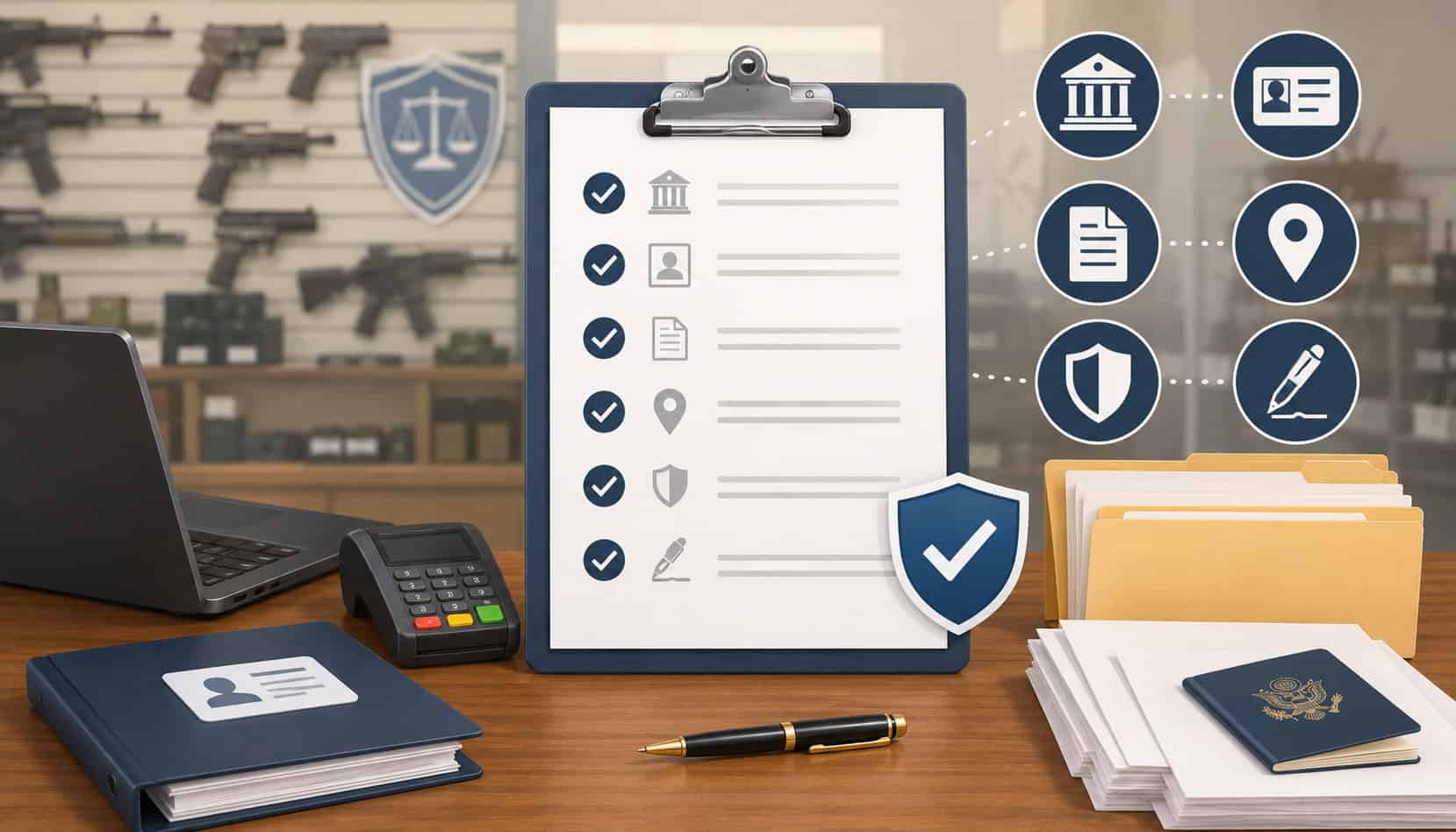
A strong merchant account documentation checklist for FFL dealers helps reduce delays before they happen. When documentation is complete, organized, and consistent, underwriters can more easily verify the business, ownership, financial stability, website disclosures, customer policies, and compliance practices.
Firearm-related businesses are often reviewed as higher-risk merchants because processors must evaluate whether the business model fits their policies and whether transactions can be supported safely.
This may include reviewing FFL verification, business registration records, website checkout flow, refund terms, prior processing history, supplier information, and expected sales volume.
Dealers can improve the review process by preparing documents before applying. A complete checklist also helps maintain account stability after approval because the same records may be requested again during periodic reviews, volume increases, or ecommerce expansion.
For a broader overview of firearm-friendly payment options, this guide on firearms merchant services can be a helpful supporting resource.
Disclaimer: This article is informational only and is not legal, financial, tax, or compliance advice. FFL dealers should consult qualified professionals and their payment provider for guidance specific to their business.
Why Documentation Matters for FFL Merchant Account Approval
Documentation matters because payment processors and acquiring banks need to understand exactly who they are approving, what the business sells, how transactions are completed, and whether the business can manage payment risk responsibly.
For firearms-related businesses, underwriting is usually more detailed because the processor must review both standard merchant risk and industry-specific compliance concerns.
A merchant account application is not only a request to accept card payments. It is also a business verification file. Underwriters use documents to confirm legal formation, ownership, tax identity, bank account legitimacy, operating history, website accuracy, refund practices, and previous payment performance.
For FFL dealers, the review often includes FFL dealer business verification, license confirmation, ecommerce policy review, and transaction risk assessment. If the business sells online, the underwriter may also review shipping language, transfer requirements, product restrictions, age-related disclosures, and checkout security.
Processors also evaluate whether the expected transaction volume matches the business’s financial records. If an applicant projects high monthly card volume but has limited sales history, weak bank balances, or no prior processing records, the processor may request additional underwriting documents for firearms businesses before making a decision.
Complete documents help answer common underwriting questions:
- Is the business legally formed and active?
- Are the owners and authorized signers verified?
- Is the FFL license current and consistent with the application?
- Does the website clearly explain policies and restrictions?
- Are refund, return, shipping, and transfer procedures visible?
- Does the business have a history of manageable chargebacks?
- Are financial records consistent with projected processing volume?
Merchant Account Documentation Checklist for FFL Dealers
A practical merchant account documentation checklist for FFL dealers should include standard business verification records, firearm-specific compliance documents, financial information, website documentation, payment history, and customer policy materials.
The exact FFL merchant account documents required can vary by processor, business model, product mix, and sales channel, but most applications follow a similar pattern.
Retail storefronts, ecommerce dealers, gunsmiths, range operators, firearm training businesses, and accessory sellers may all face different underwriting questions.
A dealer selling regulated products online may need more website and fulfillment documentation than a business that accepts payments only in person. A newer business may need more ownership, banking, and supplier records than an established dealer with years of processing statements.
The checklist below gives FFL dealers a practical starting point. It is not a guarantee of approval, but it reflects the types of high-risk merchant account documents commonly reviewed during firearm merchant account approval.
| Required Document | Why It’s Needed | Common Review Area |
| Current FFL license | Confirms the business is licensed for its stated activity | License status, business name, address, license type |
| Business registration or formation documents | Verifies legal existence of the company | Entity name, ownership, active status |
| Tax identification record | Confirms tax identity used on the application | Name match, tax ID match |
| Government-issued owner identification | Verifies owners and authorized signers | Identity, address, control persons |
| Business bank statements | Shows financial stability and operating activity | Average balance, deposits, returned items |
| Prior processing statements | Shows payment history and chargeback levels | Volume, refund ratios, disputes |
| Website policies | Helps underwriters assess customer transparency | Refunds, shipping, transfers, privacy, terms |
| Supplier or inventory records | Supports product legitimacy and business model | Product source, inventory type |
| Chargeback history | Shows dispute exposure and risk management | Chargeback ratio, refund practices |
| Fulfillment procedures | Explains how orders are completed | Shipping, transfer handling, customer communication |
| PCI or payment security documentation | Supports secure card acceptance practices | Gateway, POS, access control, fraud tools |
| Expected volume estimate | Helps set processing limits and reserve expectations | Monthly volume, average ticket, high ticket |
This firearm merchant account application checklist should be prepared before submission whenever possible. Missing or inconsistent documents can slow the review, create follow-up requests, or cause the application to be declined.
FFL License and Business Registration Documents
The FFL license is one of the most important firearm payment processing approval documents because it connects the merchant account application to the regulated activity. Underwriters may compare the license name, premises address, license type, and responsible party information against the merchant application, business registration, website, and bank records.
Business registration documents are also important because they show the legal structure behind the operation. Depending on how the business is organized, this may include articles of organization, articles of incorporation, a business license, assumed name filing, operating agreement, partnership agreement, or other formation records.
The goal is consistency. If the merchant application lists one legal name, the bank account lists another, and the website uses a third name, the processor may pause the review until the relationship between those names is documented. This is common when dealers operate under a trade name, brand name, or store name that differs from the legal entity.
FFL payment processing requirements may also include proof that the business is active and authorized to operate from the listed location. Underwriters may request current operating licenses, premises verification, lease information, or utility documentation when business records are unclear.
Dealers should make sure the FFL license, entity records, tax information, bank account, and website footer all align before applying. Small inconsistencies can create avoidable delays.
Government Identification and Ownership Verification
Government identification and ownership verification help processors confirm who controls the business and who is authorized to sign for the merchant account.
This is a standard part of underwriting, but it can be especially important for firearms-related businesses because processors want a clear record of responsible parties, ownership structure, and management authority.
Underwriters may request identification for owners, officers, partners, managing members, or authorized signers. They may also request ownership percentages, company structure documents, and records showing who has the authority to bind the business to processing terms.
For smaller dealers, this may be straightforward. A sole owner may provide identification, business registration, tax details, and bank records. For larger companies, the underwriter may need to review multiple owners, layered entities, operating agreements, or corporate resolutions.
The purpose is not only identity verification. Ownership records also help processors understand who is responsible for compliance, refunds, chargebacks, and account activity. If an application includes incomplete ownership information, outdated addresses, or missing signer authority, the processor may request clarification.
Bank Statements and Financial Records
Bank statements and financial records help underwriters evaluate whether the business has enough operating stability to support the requested processing volume. This is especially important when a dealer expects higher average tickets, seasonal spikes, ecommerce growth, or a mix of in-store and online sales.
Processors may request recent business bank statements, prior merchant processing statements, profit and loss information, balance summaries, invoices, or other financial records. The review may focus on average balances, deposit activity, returned items, overdrafts, cash flow consistency, and whether projected card volume appears reasonable.
For established businesses, prior processing statements are highly valuable. They show actual sales volume, refund activity, chargeback ratios, average ticket size, and transaction trends. For newer businesses, underwriters may rely more heavily on bank activity, inventory records, supplier invoices, business plans, or expected volume estimates.
Financial records also help determine processing limits. If a dealer requests a high monthly limit without supporting documentation, the processor may approve a lower limit first or request additional records. This is not unusual in high-risk underwriting.
Strong financial documentation can support firearm merchant account approval by showing that the business is operating legitimately, maintaining stable balances, and managing customer payments responsibly.
Website and Ecommerce Documentation Requirements
Website and ecommerce documentation requirements are especially important for dealers that accept orders online, display regulated products, sell accessories, collect deposits, or use a payment gateway.
Underwriters often review the website before approval to determine whether it clearly explains what is sold, how orders are handled, and how customers can resolve issues.
A firearm-related website should be transparent. Product categories should be accurate, pricing should be clear, contact information should be visible, and policies should be easy to find. Underwriters may review refund terms, return limits, shipping rules, transfer requirements, age-related disclosures, privacy policy, terms of service, and checkout flow.
The website should not create confusion about what customers are buying or how fulfillment works. If products require transfer through a licensed party, the process should be explained.
If certain items cannot be shipped to some locations, the site should clearly state that restrictions may apply. If returns are limited due to product type, safety, condition, or regulatory concerns, the policy should be specific.
Secure checkout is another review area. Payment processor compliance documents may include gateway details, SSL use, fraud screening tools, hosted payment page information, or ecommerce platform records.
A professional website with clear customer policies can improve underwriting confidence because it reduces the risk of disputes, complaints, and unclear transactions.
For additional context on approval preparation, see this guide on how to get approved for a firearms merchant account.
Refund and Return Policies
Refund and return policies help processors understand how customer disputes will be handled. In firearm-related commerce, clear policies are especially important because some products may have restrictions based on condition, transfer status, safety considerations, or applicable rules.
A vague refund policy can increase underwriting concern. If customers do not understand when refunds are available, how cancellations work, or whether certain products are final sale, they may be more likely to file chargebacks. Chargebacks create financial exposure for processors, which is why refund clarity is often reviewed before approval.
A strong policy should explain timeframes, eligibility, restocking fees if applicable, cancellation procedures, damaged shipment handling, and how customers should contact the business.
For ecommerce dealers, the policy should also explain what happens if an order cannot be completed due to transfer issues, shipping restrictions, failed verification, or customer ineligibility.
The policy should be easy to find before checkout. Placing it only in a hidden footer or behind unclear navigation may not be enough. Underwriters generally prefer policies that are visible, specific, and consistent with checkout terms.
Refund language should be accurate and practical. Dealers should avoid overpromising flexibility if actual operations are more limited.
Product and Checkout Transparency
Product and checkout transparency reduces confusion and supports underwriting confidence. Underwriters want to see that customers know what they are buying, what the final price is, what restrictions may apply, and how the order will be fulfilled.
Product pages should include accurate descriptions, clear pricing, relevant condition details, availability status, and any important limitations. If an item requires transfer handling, that process should be explained before payment. If shipping is limited or subject to review, the site should not imply unrestricted fulfillment.
Checkout transparency also includes visible contact information, secure payment pages, privacy disclosures, and confirmation messaging. Customers should receive enough information to understand what happens after payment. This can reduce refund requests, chargebacks, and complaints.
Hidden fees, unclear shipping costs, inconsistent product names, or surprise restrictions at the end of checkout can create disputes. For this reason, underwriters often look at the entire customer journey, not just the payment page.
A transparent website helps show that the dealer takes customer communication seriously. This is valuable because many payment risks are not caused by the product itself but by unclear expectations, weak policies, or poor post-sale communication.
Firearm Payment Processing Approval Documents
Firearm payment processing approval documents often go beyond the basic merchant account form. Underwriters may request supporting records that explain the business model, product mix, transaction flow, fulfillment process, and payment history. The goal is to determine whether the account can be approved with appropriate limits, pricing, monitoring, and risk controls.
Prior processing statements are among the most useful records. They show actual card volume, refund activity, dispute trends, average ticket, high ticket, monthly consistency, and chargeback exposure. A clean processing history can support a stronger application, while a history of elevated disputes may lead to more questions.
Dealers may also be asked for supplier invoices, inventory records, product category summaries, or fulfillment documentation. These materials help confirm that the business sells legitimate products from traceable sources and has a clear process for completing orders.
Expected processing volume should be realistic. If a business projects rapid growth, the application should explain why. Supporting evidence may include existing sales channels, ecommerce traffic, purchase orders, contracts, historical revenue, or inventory expansion.
Processors may also review whether the merchant sells only regulated products or also accessories, training, range services, gunsmithing, parts, optics, apparel, or related items. Product mix matters because different categories may carry different underwriting considerations.
Payment processor compliance documents may include:
- Current FFL license
- Business registration records
- Website policy pages
- Prior merchant statements
- Bank statements
- Supplier invoices
- Inventory summaries
- Fulfillment workflow
- Chargeback records
- Fraud prevention procedures
- PCI-related payment security information
Common Reasons Applications Get Delayed

Applications often get delayed because the underwriter cannot match the information across documents. A business name may differ between the FFL license, bank account, tax record, application, and website. An address may be outdated.
Ownership information may be incomplete. The website may show products or policies that were not disclosed on the application.
Missing FFL details are another common issue. If the license is expired, unreadable, mismatched, or not provided, the processor may pause the review. Underwriters need to confirm that the business is properly licensed for the activity described in the application.
Website issues can also delay approval. Missing refund policies, unclear shipping terms, incomplete contact information, no privacy policy, confusing transfer instructions, or unsecured checkout pages may create follow-up requests. Ecommerce dealers should expect their site to be reviewed carefully.
Financial gaps may also slow the process. Missing bank statements, incomplete processing statements, unexplained chargebacks, or projected volume that does not match business history can lead to additional underwriting questions.
Unsupported products are another concern. Processors have acceptable-use policies, and not every provider supports every firearm-related product or sales model. If the website includes products outside the processor’s guidelines, approval may be delayed or declined.
Common delay triggers include:
- Incomplete merchant application
- Expired or unreadable FFL license
- Business name mismatch
- Missing ownership details
- No clear refund or return policy
- Website checkout issues
- Unsupported product categories
- Excessive chargeback history
- Missing bank statements
- Inconsistent projected volume
- Unclear fulfillment process
A dealer can reduce delays by reviewing the full application package before submission. The file should tell one consistent story: who owns the business, what it sells, how it sells, how customers are protected, and how payments are managed.
Organizing Documents for Faster Underwriting Review

Document organization can make a meaningful difference in the underwriting experience. Even when a dealer has all required records, poorly labeled files, blurry scans, outdated versions, and scattered attachments can slow the review. Underwriters need to move quickly through the file and confirm details without confusion.
Start by creating a secure digital folder for merchant account documentation. Separate files into categories such as licenses, business records, ownership records, banking, processing history, website policies, supplier documents, and compliance procedures. This makes it easier to respond quickly if the processor asks for additional information.
Use clear file names. A file called “scan001” is less helpful than “Current-FFL-License” or “Business-Bank-Statement-April.” If multiple months of statements are required, label them in order. If a document has multiple pages, combine them into one readable PDF rather than uploading separate images.
Readable copies are essential. Documents should not be cropped, blurry, password-locked, or incomplete. All pages should be included, especially for bank statements and processing statements. If a statement includes blank pages, keep them if they are part of the official record.
Dealers should also maintain updated records after approval. Merchant accounts may be reviewed again when volume increases, business ownership changes, ecommerce channels expand, or risk monitoring flags unusual activity.
Payment Security and Compliance Documentation
Payment security and compliance documentation helps processors understand how the business protects cardholder data, controls employee access, monitors fraud, and reduces dispute risk. While the exact requirements vary by provider and sales channel, every dealer should be prepared to explain how payments are accepted and secured.
For in-store sales, documentation may include POS system details, terminal information, user access controls, refund permissions, batch procedures, and receipt practices.
For ecommerce, documentation may include payment gateway details, hosted checkout information, SSL use, fraud filters, address verification, card verification tools, and order review procedures.
PCI-aware workflows are important because businesses that accept card payments are expected to handle payment data responsibly. A dealer should understand whether card data is stored, who can access payment systems, how passwords are managed, and how suspicious transactions are reviewed.
Fraud monitoring procedures are also useful. Firearm-related businesses may have higher average tickets, which can attract fraudulent attempts. Underwriters may look favorably on merchants that use order review rules, customer verification, velocity limits, shipping checks, and manual review for unusual transactions.
Refund controls matter as well. Employees should not have unrestricted refund access unless necessary. Clear refund approval procedures can reduce internal errors and unauthorized activity.
Security documentation may include:
- POS or gateway provider details
- PCI validation records, if available
- Fraud screening settings
- Employee access policy
- Refund approval workflow
- Password and account access practices
- Secure upload procedures for documents
- Incident response contact process
For broader operational guidance, this resource on gun-friendly merchant services explains how underwriting, payment stability, and compliance expectations can intersect.
Common Documentation Mistakes FFL Dealers Should Avoid
Some documentation mistakes are simple but costly. An expired license, mismatched legal name, missing bank statement page, or vague refund policy can create unnecessary delays. In high-risk underwriting, consistency is one of the most important signals.
One common mistake is submitting outdated records. A dealer may provide an old business registration, prior address, expired identification, or old website policy. Underwriters need current information, especially when reviewing licenses, ownership, banking, and ecommerce disclosures.
Another mistake is hiding or minimizing important details. Dealers should not try to disguise product categories, alter business descriptions, or avoid disclosing ecommerce activity.
Accurate underwriting is more stable than approval based on incomplete information. If the processor later discovers undisclosed products or sales channels, the account may be reviewed or restricted.
Weak website setup is also a frequent problem. A website that lacks clear policies, uses generic product descriptions, has broken links, hides contact details, or creates checkout confusion may be viewed as higher risk.
Missing transaction history can also cause challenges. New businesses may not have prior statements, but established dealers should provide them when requested. If chargebacks occurred, it is better to explain what changed than to omit the records.
Avoid these mistakes:
- Submitting expired FFL or identification records
- Using inconsistent business names
- Leaving ownership information incomplete
- Uploading unreadable documents
- Omitting prior processing history
- Providing vague refund policies
- Hiding fees or restrictions
- Listing unsupported products
- Using unsecured checkout pages
- Ignoring follow-up requests
Best Practices for Maintaining Merchant Account Compliance
Merchant account compliance does not end after approval. FFL dealers should maintain records, update policies, monitor transactions, review statements, and communicate changes to their processor when needed. Ongoing compliance helps reduce the risk of holds, reserves, account reviews, or sudden processing interruptions.
Start by keeping core documents current. Renewed FFL records, updated business licenses, ownership changes, new locations, bank account changes, and website policy updates should be stored in the underwriting folder. If the processor requests an updated document, the dealer should be able to provide it quickly.
Review monthly processing statements. Look for chargeback trends, refund ratios, unusual volume changes, batch issues, and any account notices. Early detection helps prevent small problems from becoming larger risk concerns.
Customer policies should also be reviewed regularly. Refund, return, shipping, transfer, privacy, and terms pages should match actual operations. If the business changes how it fulfills orders, the website should reflect that change.
Dispute prevention is another key practice. Clear receipts, accurate descriptors, responsive customer service, shipment communication, and written refund procedures can all reduce chargebacks. Many disputes happen because customers do not recognize a charge or cannot get a timely answer.
Ecommerce security should also be maintained. Keep platforms updated, monitor suspicious orders, restrict employee permissions, and use secure payment systems. Firearm payment processing approval documents are easier to maintain when the business already operates with clear processes.
Helpful ongoing practices include:
- Updating licenses and business records promptly
- Reviewing monthly statements
- Monitoring chargebacks and refunds
- Keeping customer policies visible
- Maintaining accurate product descriptions
- Using secure payment tools
- Training employees on refund and access procedures
- Notifying the processor before major business changes
For related guidance, see this overview of firearm-friendly payment processing.
What documents are required for FFL merchant account approval?
The most common documents include a current FFL license, business registration records, tax identification details, owner identification, bank statements, prior processing statements, website policies, and payment security information.
Depending on the business model, processors may also request supplier invoices, inventory summaries, fulfillment procedures, chargeback history, and ecommerce documentation.
The exact FFL merchant account documents required can vary. A retail storefront may need different supporting records than an ecommerce dealer, range operator, gunsmith, or accessories seller. Newer businesses may need more financial and ownership documentation because they have less processing history.
A good application package should prove that the business is legitimate, properly licensed, financially stable, transparent with customers, and prepared to manage payment risk. Dealers should prepare documents before applying rather than waiting for repeated underwriter requests.
Why do processors request FFL documentation?
Processors request FFL documentation to verify that the business is licensed for the firearm-related activity described in the merchant account application. The FFL record helps underwriters confirm the business name, premises address, license type, and legitimacy of the operation.
Because firearm-related businesses involve regulated products, payment processors usually need more confidence that the merchant’s activity fits their underwriting policies.
The FFL document is a core part of that review, but it is not the only factor. Underwriters may also compare the license to business registration records, website content, bank statements, and ownership information.
Official licensing information is available from the relevant licensing authority, which explains that businesses engaged in dealing, manufacturing, or importing firearms generally need the appropriate federal firearms license. Dealers should keep license records current and consistent across all business documents.
Do firearm ecommerce websites get reviewed?
Yes. Firearm ecommerce websites are commonly reviewed during underwriting because online sales introduce additional payment risk, customer communication issues, fraud concerns, and fulfillment questions.
Underwriters may check whether the website clearly explains product categories, pricing, refund terms, shipping rules, transfer procedures, contact information, privacy practices, and checkout security.
A website that lacks basic policies can delay approval. Underwriters want to see that customers understand what they are buying, how fulfillment works, and how disputes or refunds are handled. Clear website documentation helps reduce chargebacks because customers have fewer surprises after payment.
Dealers should review their website before applying. Important pages should be visible, accurate, and consistent with the application. Broken links, unclear terms, hidden fees, or unsupported product categories can create concerns during firearm merchant account approval.
What bank statements are needed for underwriting?
Processors commonly request recent business bank statements. The number of months can vary, but underwriters usually want enough information to assess cash flow, deposit activity, average balances, and financial stability. If the business has prior processing history, merchant statements may also be requested.
Bank statements help underwriters compare projected processing volume with actual operating capacity. If a dealer expects significant monthly card volume, the processor may want to see that the business has the financial strength and transaction history to support it.
Statements should be complete, readable, and tied to the business account listed on the application. Missing pages, personal accounts, cropped screenshots, or inconsistent names can slow the review.
Newer dealers without extensive records may need to provide supplier invoices, inventory details, business plans, or other supporting documentation.
Can incomplete documents delay approval?
Yes. Incomplete documents are one of the most common reasons merchant account applications get delayed. Underwriters cannot finalize a review if required information is missing, unclear, outdated, or inconsistent. Even small issues can create follow-up requests.
For example, if the FFL license lists one address while the bank account or website lists another, the processor may request clarification. If bank statements are missing pages, the underwriter may ask for complete copies. If the refund policy is vague or absent, the website may need updates before approval.
Dealers can reduce delays by preparing a complete documentation folder before applying. Each file should be current, readable, and clearly labeled. The goal is to make the review easy by giving the underwriter a complete and consistent view of the business.
Why are refund policies important?
Refund policies are important because they help reduce customer confusion and payment disputes. When buyers understand cancellation rules, return eligibility, restocking fees, damaged shipment procedures, and refund timelines, they are less likely to file chargebacks.
For FFL dealers, refund policies can be more complex because some transactions may involve regulated products, transfer procedures, or restricted returns. A clear policy helps customers understand what can and cannot be refunded and what happens if an order cannot be completed.
Underwriters review refund policies because chargebacks create risk for processors. A business with clear customer policies appears more prepared to manage disputes responsibly. The policy should be visible before checkout and should match actual business practices.
What financial records help with approval?
Helpful financial records include business bank statements, prior merchant processing statements, profit and loss summaries, supplier invoices, inventory records, and sales history. The strongest records are those that support the requested monthly volume, average ticket, and business model.
Prior processing statements are especially useful because they show real payment performance. Underwriters can review sales volume, refunds, chargebacks, and average tickets. If the business has low chargebacks and stable volume, those records can strengthen the application.
Newer businesses may not have processing statements. In that case, financial stability may be supported by bank records, supplier documentation, inventory investment, storefront evidence, ecommerce readiness, and realistic projections. The key is to provide records that make the business model clear and credible.
How can FFL dealers improve underwriting success?
FFL dealers can improve underwriting success by preparing complete documents, keeping business records consistent, publishing clear website policies, using secure payment systems, and responding quickly to processor requests.
The application should clearly show what the business sells, how it operates, who owns it, and how payments are managed.
Dealers should also be transparent about sales channels and product categories. Trying to hide ecommerce activity or regulated products can create account instability later. Accurate underwriting is better for long-term processing reliability.
Before applying, dealers should review the firearm merchant account application checklist, update expired records, organize bank and processing statements, and test their website’s customer journey. A professional, complete, and consistent file gives underwriters fewer reasons to delay the application.
Conclusion
A strong merchant account documentation checklist for FFL dealers helps firearm-related businesses prepare for underwriting, reduce delays, and improve the likelihood of stable payment processing.
Processors review documents to verify business legitimacy, ownership, licensing, financial strength, customer transparency, website readiness, and transaction risk.
The most important preparation step is consistency. FFL records, business registration, bank statements, website policies, ownership information, and processing history should all support the same business profile. Clear documentation helps underwriters understand the operation and reduces unnecessary back-and-forth.
FFL dealers should maintain updated records even after approval. Ongoing compliance, secure payment systems, visible customer policies, chargeback monitoring, and accurate business disclosures all support long-term account stability.
With organized gun store merchant account documentation, realistic volume projections, clear ecommerce policies, and strong payment security practices, dealers can approach underwriting with more confidence and build a more reliable foundation for secure payment processing.